
WilloWeb

Granite POTS replacement, compared with WilloWeb

Granite runs EPIK as a managed service for estates that span the country. We go into your Bay Area building, replace its alarm, elevator and fax lines in person, and run the circuit they ride on.

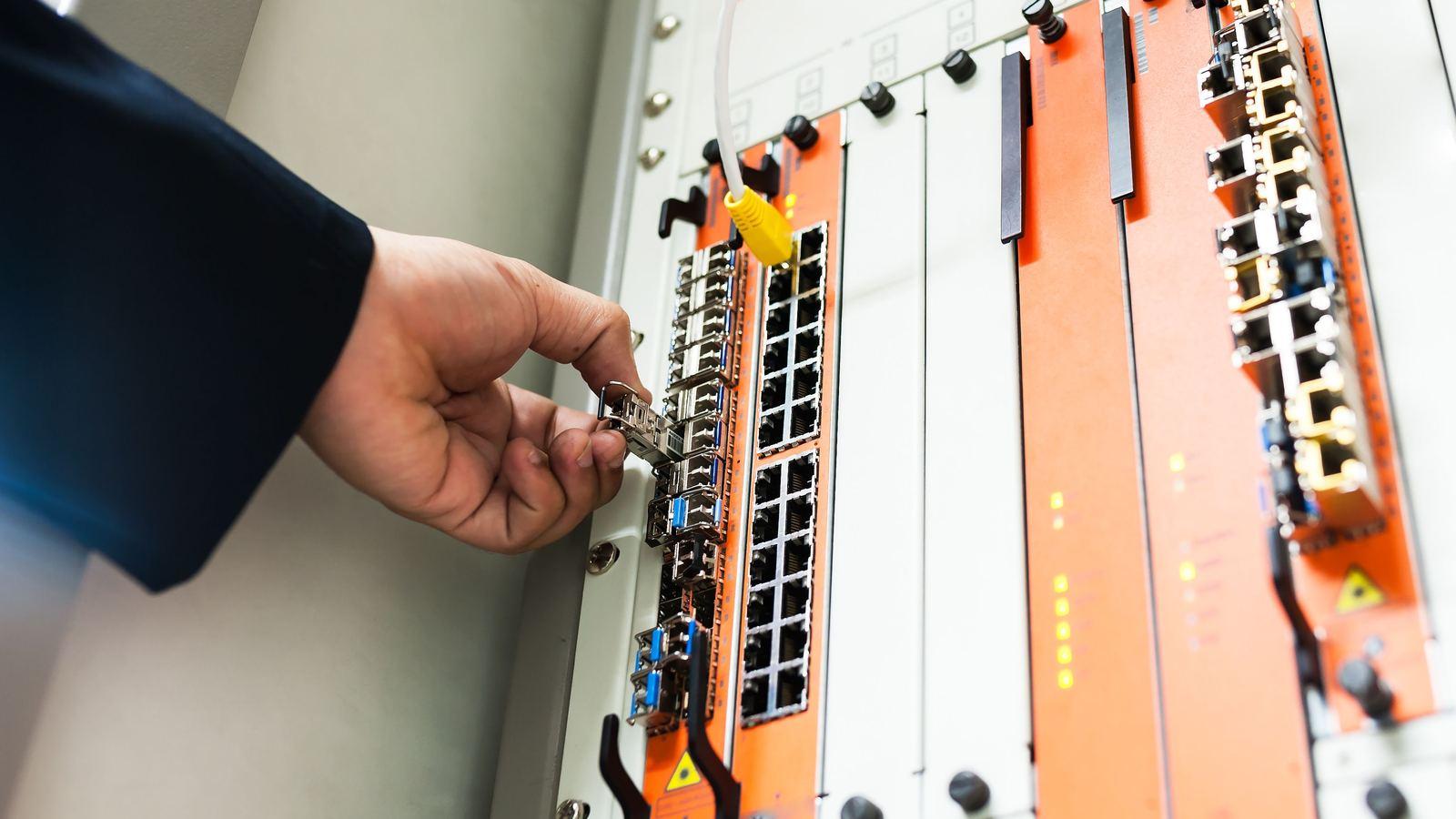
A technician’s hand fitting a small module into a telecom equipment shelf with orange line cards, rows of network ports and a yellow cable plugged in.

Granite or us: which fits your estate

Granite fits when

  • You run a national estate, the Bay Area is a small slice of it, and one vendor for every site matters more than who does each install.
  • You want the same device, the same contract and the same monitoring at every address.
  • Some of your buildings cannot take a new wired connection, so a device that leads with cellular suits them.

We fit when

  • You have one Bay Area building, or a handful, and want its fire panel, elevator and fax lines surveyed, moved and tested in person.
  • You want one company answering for the lines, the voice service and the circuit they ride on.
  • Your estate is national, but you want its Bay Area buildings handled locally. We can take those sites on their own.

What you get from Granite EPIK and from us

Granite EPIK and WilloWeb compared, one question per row
Who you buy fromWilloWebA Bay Area company with its own network in the buildings we serve; voice and POTS replacement nationwideGranite EPIKGranite Telecommunications (Quincy, Mass.), 700,000 locations; its copper lines are resold from the major carriers
What replaces the copper lineWilloWebOur voice service, on every alarm, elevator, fax and intercom line still in useGranite EPIKEPIK: one appliance with analog ports, Ethernet and LTE; EPIK Edge takes up to 8 lines
What it runs onWilloWebOur own circuit into your building, so no other company’s internet sits under your linesGranite EPIKEPIK: your wired internet, with LTE as backup; EPIK Edge: LTE first, then Wi-Fi or broadband
Approvals and testingWilloWebDepends on the equipment chosen for each deviceGranite EPIKCalifornia State Fire Marshal listed through June 30, 2027; FDNY approved as an MFVN in 2022
Who installs itWilloWebOur own technicians, through the test and the disconnect orderGranite EPIKGranite’s field team if you choose it: 12,000 technicians across North America
Monitoring and supportWilloWebOne local company for the line, the voice service and the circuitGranite EPIKPort-level monitoring from Granite’s network operations center; alarm monitoring through Rapid Response
Price and termWilloWebPer building, after a free estimate; no overage or option fees, and no rate rise at month 12, at month 18 or everGranite EPIKNo published price; monthly per port with a 36-month minimum, and the box is free

Sources

Granite, EPIK and EPIK Edge are marks of Granite Telecommunications, LLC. We name them to identify Granite’s products; Granite has no affiliation with us and has not endorsed or reviewed our comparison.

A Bay Area building with alarm, elevator or fax lines on copper? Let us walk it with you.

Request a site check

Two example estates, and which company fits each

Scenario one: a national retailer, 200 stores across 40 states

Every store has a fire alarm dialer, a burglar alarm circuit and a fax number nobody uses. Head office is in Ohio, the estate manager has seen few of the buildings, and the project has to close inside a fiscal year.

What decides it is reach: 200 buildings need the same answer from people who can get to each of them, tracked in one place. Granite sells exactly that model, with one bill, one point of contact for ordering and one dedicated service contact.

Which fits

Granite, without qualification.

We sell voice and POTS replacement nationwide too, but an estate this wide is better served by one national vendor with its own dispatch, and Granite fits it better than we do.
Scenario two: one Bay Area building, 10 analog lines, a fire panel and two elevators

A single commercial property whose bill shows ten analog lines: two elevator cab phones, two for the fire alarm dialer, a fax behind the copier, a gate callbox, and four nobody can place. Nobody has matched the bill to the devices in years.

Estate scale buys nothing in one building. The fire panel and the cab phones each have their own requirements, their own test and their own contractor who signs it off.

Our guides to fire alarm panel phone lines and elevator phone line requirements set out what each one asks of its line.

Which fits

The local operator: us.

What decides this building happens inside it: matching ten billed lines to what is wired, moving the life-safety lines on their own dates, and answering for the circuit when the alarm company calls to test.

What a local install involves

  1. 1

    Survey with the bill in hand

    We walk the building and match every billed line to the device it feeds. On a bill for ten lines, for example, the ones nobody could place can turn out to feed a lift monitoring panel and a long-dead modem.

  2. 2

    Establish the path into the building

    We settle how our circuit enters the building, by what route and with what the owner allows. In a building already on our network that is answered on the first visit; elsewhere we answer it before anyone talks about voice.

  3. 3

    Place the equipment where it will work

    Adapters and gateways go where the cabling and the power are, even if the free wall space is elsewhere. Anything relying on a wireless signal is sited for that signal; basements and metal-lined rooms are where it tends to go wrong.

  4. 4

    Install the replacement

    Our circuit and equipment go in before any line moves.

  5. 5

    Prove supervision

    For a monitored path, dial tone is not proof. We cut the new path ourselves and check that the panel goes into trouble and the supervising station logs the failure, with the monitoring company on the phone and the account on test. The elevator contractor does the same for each cab. The old line’s monthly charge ends with its disconnect order.

A red manual fire alarm pull station mounted on a wall.

Before you choose between Granite and us

Whoever installs should survey first. Granite’s field technicians handle site readiness assessments, so ask whether one is in your EPIK quote; we survey every building before we price it. A useful survey finds the demarc, the panel and its dialer, how the paging amplifier is triggered, whether the gate callbox needs tones sent back, the power where the equipment will hang, and the wireless signal inside that closet.

Count them before you order. List every party between the panel and the monitoring station, with a phone number for each: the device maker, whoever carries its data, whoever supplies the wired connection and the alarm monitoring company. Each can check its own piece and find nothing wrong while your panel still cannot reach the station. With us, one company supplies the circuit, terminates the voice and installs the equipment, so the list is us and your monitoring company.

In both cases they are part of the cutover, since a new path for your panel’s signal changes their service too. Afterward they confirm every signal type the panel can send and record the new path. They usually also tell you whether the replacement meets the supervision requirement for that panel, which turns on your equipment and the code your inspector enforces. With us, the technician coordinating them is standing in your building.

Send the address list first

List the buildings you want off copper, with a recent phone bill for one of them. We will tell you how our network reaches each Bay Area address, walk the first building against that bill, and quote its lines and its circuit as one job.