

What is a POTS line?
POTS stands for Plain Old Telephone Service: the analog phone line on copper wire from the telephone company. In commercial buildings these lines often run equipment, like a fire alarm panel or an elevator phone.
How a POTS line works
A POTS line, short for Plain Old Telephone Service, is a single analog telephone circuit delivered over a pair of copper wires between a telephone exchange and a building. One pair carries one conversation. The exchange also puts a low DC voltage on the pair, and that voltage is what lets a plain analog phone work with nothing plugged into a wall socket.
The copper pair does three jobs at once
- It carries the signal
- A voice call, a fax, an alarm report or a modem’s data, all over the same two wires.
- It brings its own power
- The voltage comes from the telephone company’s exchange, so a basic corded phone on the line keeps working when the building loses power.
- It gives the equipment a voltage to watch
- A fire alarm panel checks the voltage on its phone lines and reports a trouble when it is lost, which is how a cut or dead line shows up at the panel.
Whatever replaces a POTS line has to take on all three: carry the signal, keep running through a power cut, and report its own failure. For a fire alarm panel, the code’s requirements for that replacement are set out in our fire alarm phone line guide.
Why commercial buildings still have POTS lines
Each line was ordered by a different contractor at a different time, billed to a different account, and then worked for years without complaint. The alarm company ordered one, the elevator company another, the landlord a third, and no single person in the building has ever held the whole list. Most of them serve equipment, in six families.
Fire alarm control panels
The panel’s communicator dials the monitoring company to report alarms, troubles and its routine test signal.
Elevator cab phones
The button in the cab calls a staffed number. Some models draw their power from the phone line itself.
Intrusion alarm communicators
A burglar alarm reports break-ins to its monitoring company by dialing out in the same way.
Entry callboxes and gate phones
A phone at a gate, door or loading dock calls a tenant or the front desk, often on a line of its own.
Fax machines and multifunction copiers
A fax machine, or a copier’s fax function, on its own number.
Legacy modems
Card terminals, fuel tank monitors and other equipment that send their data by dialing out over a modem.
That is why a building’s first count of its analog lines is so often wrong, and why some of the lines it finds turn out to be billing for equipment that is long gone.
Why your POTS lines need a plan now
AT&T has federal approval to stop copper phone service in parts of every Bay Area county from June 1, 2027. A POTS line in one of those areas stops working when the service does, and so does the fire alarm dialer or elevator phone on the end of it.
The lines also cost more to keep. Federal rules that held down the price of leased copper lines ended in August 2022, and phone companies passed the increases on to business customers.
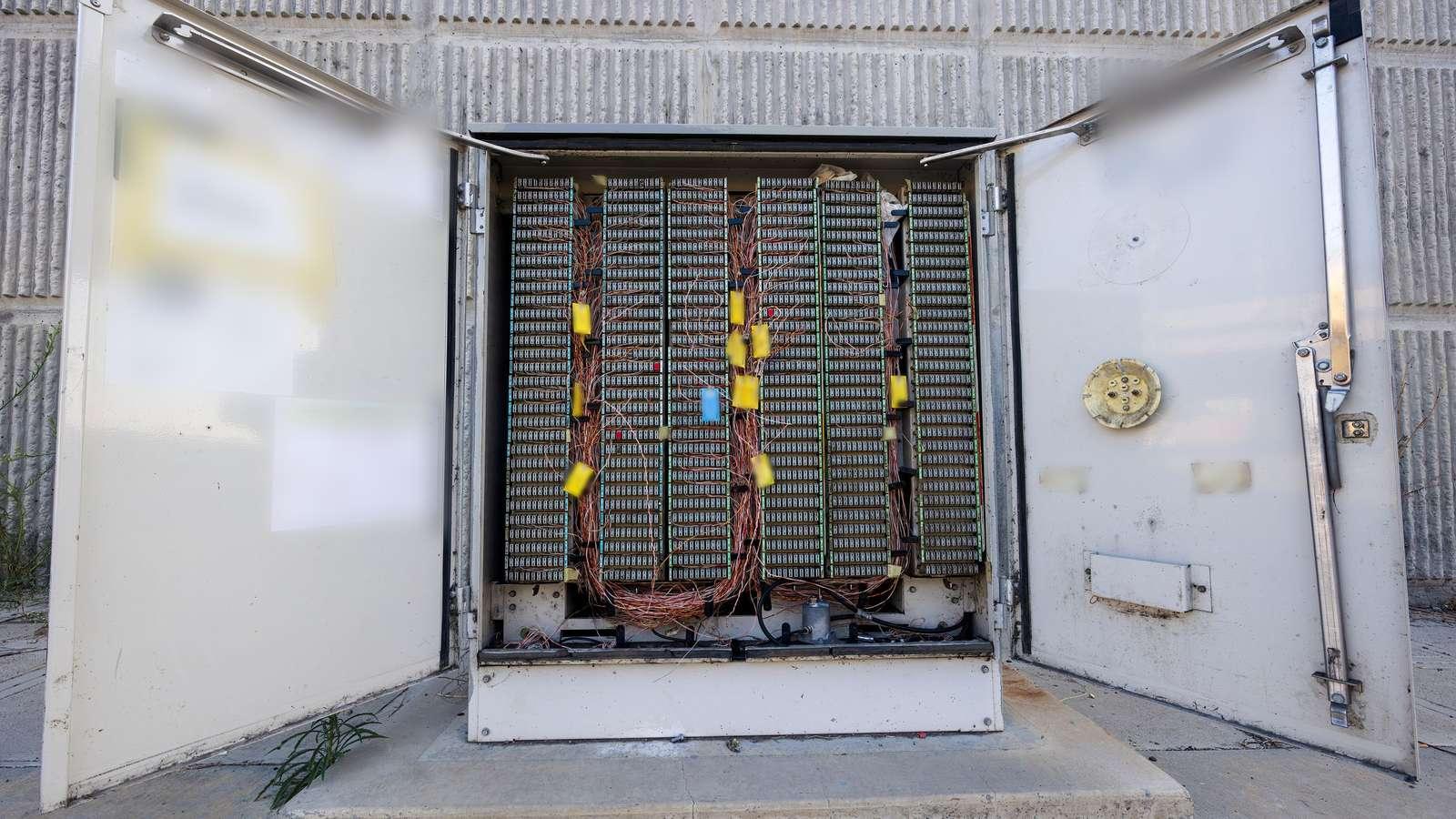
Four ways to tell if you have a POTS line
You can run all four yourself, without a technician. Any one of them tells you something, and together they usually settle it.
On the phone bill
Each analog line is billed on its own, with its own number. Look for numbers you cannot match to a person or a handset. In many buildings the fax, alarm and elevator lines are among them, so trace every unmatched number first.
At the jack
A phone jack is a 6-position socket wired with two conductors for one line, or four for two, and it is narrower than the 8-position socket a network cable plugs into. A device whose cord runs straight to a phone jack is on a phone line, and the demarc shows whether copper from the telephone company is behind it. Alarm panels are the exception: they are commonly connected through an RJ31X, an 8-position jack made for alarm equipment, so follow an alarm panel’s wiring from the panel itself.
During a power cut
A basic corded phone on a POTS line keeps its dial tone when the building loses power. If a phone on the line went dead with the lights at the last outage, the line runs through equipment on building power, such as a phone system or a VoIP adapter.
At the demarc
The demarc is where the telephone company’s wiring ends and the building’s begins. Analog lines arrive there as pairs of wires on terminal blocks, where a network service would end on equipment with ports. Counting the pairs in use and tracing where each one goes turns a guess into an inventory.
We make the list for you, free
We review every analog line in your building, tracing each one to the device it serves and telling you which ones can be cancelled. Then we replace each line that still serves something and move it onto a circuit we run, anywhere in the Bay Area. Every move follows our five-step cutover.
POTS line questions
On a carrier invoice it may appear as a business line, a measured business line, or a service code such as 1FB, a one-party flat rate business line. Your alarm company may call it an analog or dial-up line, your elevator contractor the cab phone line, and almost everyone else a landline. A list of your own lines will usually come back under several of these names at once, and matching them up is most of the work.
In everyday use, yes, and nobody will misunderstand you. Many phones people call landlines, though, sit on a desk and run as a digital service over an internet circuit, and those are not POTS lines. A POTS line is analog copper all the way from the exchange to the device, and that is what decides what a replacement has to do.
The telephone company powers the line. What can fail is the phone: a basic corded phone needs nothing more, but a cordless phone’s base station runs on building power and goes dead in an outage, even on a POTS line.
That depends on what sits at the far end. Some analog lines carry a fire alarm panel or an elevator phone, which have to keep working on whatever replaces the line. Some carry a fax number that people still send documents to, where keeping the number matters more than keeping the line. And some serve equipment that was removed years ago and are still billing. Each case has a different answer, so find out which one you have before deciding anything about the service.
If it serves nothing, yes, and that is the cheapest outcome there is. If it serves a fire alarm panel or an elevator cab phone, no: those devices usually answer to a code requirement, so the line can go only after a replacement path is installed and tested. Cancel the dead lines first, and give the others a disconnect date once their replacements work.
Where to go from here
Which one you need depends on what your lines serve.
- Replacing them in the Bay AreaHow we work, how we run the cutover and the areas we serve.
- Replacing them outside the Bay AreaWhat drives the cost of replacing each kind of line, and the order the work runs in.
- If you have a fire alarm panelWhat NFPA 72 asks of the path that replaces a panel’s phone lines.
- If you have elevatorsWhat ASME A17.1 and California’s Title 8 ask of the phone in each cab.